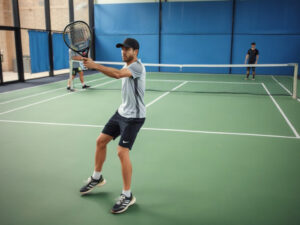


At the net, padel rewards players who can make small decisions quickly, and the volley is where that truth becomes impossible to ignore. A compact swing is not just a stylistic preference; it is a practical advantage that helps you meet faster balls with cleaner contact and less wasted motion. When your preparation is shorter, your timing becomes simpler, your reactions become sharper, and your control starts to feel repeatable instead of uncertain. That matters in padel because volleys are often played under pressure, with little space and even less time. The players who handle those moments best are rarely the ones swinging hardest. They are usually the ones who keep their motion efficient, balanced, and calm.
Shortening your swing does not mean becoming passive or defensive. In fact, the best compact volleys still feel active because they use good body position, early preparation, and a firm but relaxed contact point. The goal is to remove unnecessary movement so the paddle arrives on time and in the right place without forcing it. That creates better accuracy, better placement, and more authority over the point. It also helps reduce mistakes caused by over-rotating, reaching, or swinging too far back before contact. Once you understand how the mechanics work, the volley becomes less about power and more about efficiency.
Why Shortening Your Volley Swing Matters
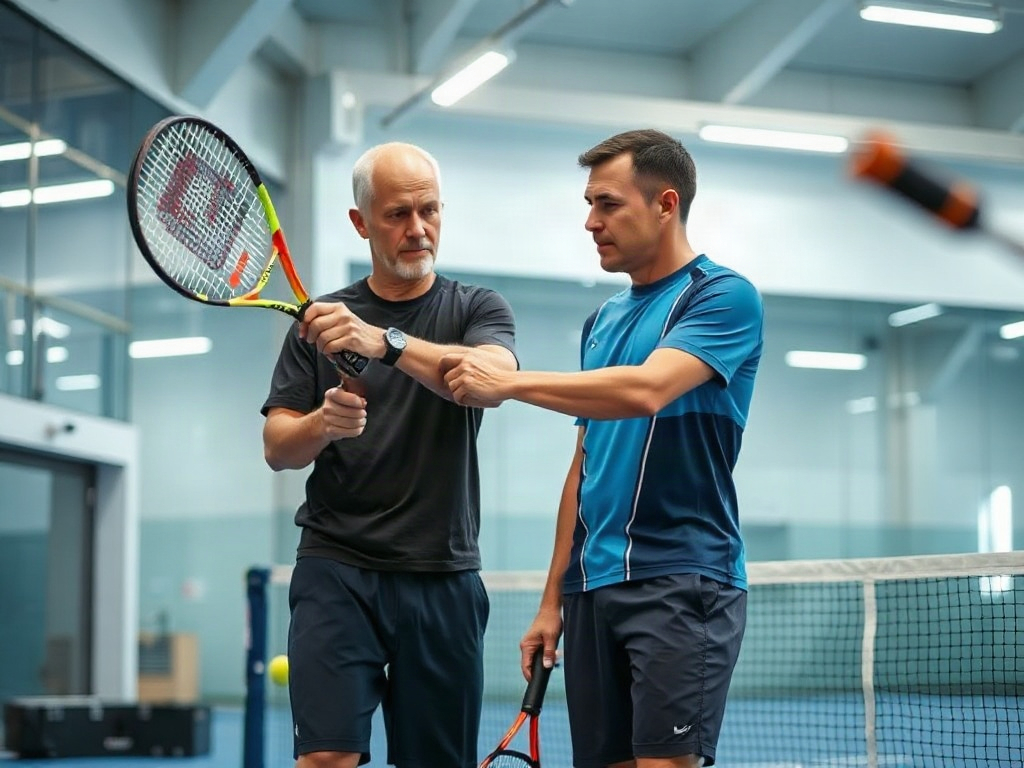
Many players assume that a longer swing gives them more control because it feels smoother, but in padel the opposite is often true. A long swing creates more moving parts, which increases the chance of mistiming the ball or losing stability at contact. A shorter motion lets you respond earlier, especially when the ball comes fast off the glass or from a sharp angle. It also makes it easier to keep the paddle in front of your body, where control is naturally stronger. That is one reason elite net players appear almost effortless during volleys. Their technique is compact enough to stay ready, yet structured enough to be precise.
- Improved reaction time when the ball arrives quickly
- Better accuracy in tight net exchanges
- More consistent placement under pressure
- Reduced risk of overhitting or spraying the ball wide
- Cleaner contact in both defensive and attacking volleys
There is also a mental benefit to shortening your swing. When you trust a compact movement, you stop rushing to generate power and start focusing on timing and positioning instead. That shift is important because padel volleys are often won by players who make the simplest good decision at the right moment. A shorter swing encourages that mindset by keeping the action contained and repeatable. It also helps you recover faster after the shot, which is crucial if the exchange continues. In other words, compact technique does not limit your game; it sharpens it.
Understanding the Basic Padel Volley Mechanics

A good volley begins before the ball reaches you, because preparation shapes everything that happens next. The ready position should place your paddle in front of your body, your knees slightly flexed, and your weight balanced enough to move in any direction. From that position, the swing does not need to travel far because your paddle is already close to the contact zone. The shorter path means the ball meets the paddle sooner, with less extra motion to interfere with direction or touch. This is why compact preparation is so important in padel, especially at the net. It gives you a stable foundation for both control and speed.
Your ready position should feel alert but not tense, as if you are waiting for a fast cue rather than swinging in advance. The paddle belongs in front of your chest or slightly to the forehand side, depending on the incoming ball and your stance. Your elbows should remain relaxed so you can adjust without locking up the upper body. If the paddle drops too low or drifts behind you, the swing becomes longer automatically. A clean setup makes the volley simpler because it shortens the distance between preparation and contact. That small difference often decides whether the ball stays controlled or flies off the strings.
Body position also affects how much you need to swing. When your shoulders are aligned and your feet are active, you can redirect the ball with a smaller motion. If you are caught upright or off balance, you may feel forced to make a bigger stroke just to stabilize the shot. That is why net players should think about footwork and posture as part of their volley technique, not separate from it. The volley is not only an arm action; it is a whole-body response built on timing and balance. The more stable your base, the shorter your swing can be.
Key Steps to Shorten Your Swing
Shortening your swing is easier when you break it into a few deliberate habits rather than trying to fix everything at once. First, keep the preparation compact and avoid taking the paddle far back behind your shoulder. Second, use a controlled forward motion that feels more like guiding or punching the ball than carving through it. Third, keep your contact point in front of the body so the ball is met early and cleanly. These changes work together, because each one reduces excess movement while improving your ability to place the volley. When practiced consistently, they become automatic under match pressure.
- Keep the backswing minimal and compact
- Contact the ball in front of your body
- Use a short, efficient forward motion
- Stay light on your feet for quicker adjustment
- Recover immediately after contact
The non-dominant hand can be surprisingly useful in making your volley more compact. Many players let that hand drift away from the body too early, which causes the shoulders to open too much and the swing to get longer than necessary. When the non-dominant hand stays involved for balance, it helps keep your upper body organized and stable. It can also improve shoulder control, especially on faster exchanges where your instinct might be to over-rotate. By using both sides of the body more intelligently, you create a shorter and cleaner stroke path. That is one of the simplest ways to improve control without changing your whole game.
| Volley Habit | Effect on Swing Length | Effect on Control |
|---|---|---|
| Compact ready position | Shortens preparation | Improves early contact and stability |
| Contact in front of the body | Reduces the need for a big swing | Increases directional accuracy |
| Relaxed non-dominant arm | Prevents over-rotation | Supports balanced shot-making |
| Short forward motion | Keeps the stroke efficient | Helps with touch and placement |
The table above shows a simple truth: control improves when the swing becomes more efficient, not more elaborate. Each habit supports the others, which is why trying to fix only one element rarely solves the whole problem. For example, a compact motion will still feel unstable if your contact point is late. Likewise, good contact can still break down if your upper body opens too much. The most reliable solution is to combine a short preparation, a balanced stance, and a forward contact point. Once those pieces work together, the volley becomes much easier to trust.
Common Mistakes That Lead to Long Swings
One of the most common errors is over-rotating the shoulders before the ball arrives. That extra turn may feel powerful, but it often pulls the paddle out of the ideal contact path and delays the shot. Another frequent mistake is dropping the paddle too low, which forces a bigger upward recovery before contact. Some players also try to swing too hard, believing that power will solve placement problems. In reality, excess force usually makes the ball less predictable and more difficult to control. The best volley players are usually the ones who look the quietest in their upper body.
- Over-rotating the shoulders before contact
- Letting the paddle drop too low during preparation
- Using too much power instead of guiding the ball
- Waiting too long to get ready for the shot
- Trying to hit through the ball rather than place it
Another issue is late preparation, which often causes a rushed swing and poor spacing. If you wait until the ball is already close to react, your body tends to compensate with a larger motion because it has less time to organize. This is where many players lose control, especially on quick volleys or balls that come off the back wall. Early preparation helps prevent that panic response. It gives you more time to set the paddle in front of you, maintain balance, and choose a smaller stroke. As a result, the swing stays shorter even when the rally gets faster.
Drills to Improve Volley Control
Drills are the fastest way to turn compact technique into something natural because repetition teaches your body what efficient motion feels like. A wall volley drill can help you build consistency by forcing you to maintain a short, repeatable swing over many contacts. Partner feed drills are useful because they add unpredictability, which improves reaction speed and contact discipline. Target placement exercises also help because they shift your focus from simply getting the ball back to controlling where it goes. Together, these drills develop the habits that make a short swing reliable in real matches. Without them, it is easy to understand the concept but fail to execute it under pressure.
Shadow swings are especially valuable because they let you isolate technique without the distraction of a live ball. Stand in your ready position and rehearse the full volley action with a deliberately short motion, paying attention to where the paddle starts and where it finishes. The purpose is not speed but clarity, so every repetition should feel controlled and balanced. You should notice whether your shoulders stay quiet and whether your hand travels unnecessarily far backward. Repeating this movement in small sets helps the body memorize the shorter path. Over time, that memory carries into match play and makes the compact swing feel natural instead of forced.
- Practice in front of a mirror to monitor your paddle path
- Use slow repetitions before increasing speed
- Focus on contact position rather than force
- Repeat in short sets to build consistency
- Finish every motion in a balanced recovery stance
If you want better control, combine technical drills with decision-making drills. For example, ask a partner to feed balls to different zones so you must adjust while keeping the swing short. That type of practice teaches you that compact technique does not mean robotic technique. Instead, it means being efficient enough to adapt without losing structure. The more often you practice under small variations, the more stable your volley becomes in real situations. This is where control stops being a theory and becomes a habit.
Match Play Tips for Better Net Control
In a match, compact technique only works if you stay alert and ready before the ball arrives. That means keeping your feet active, your paddle centered, and your mind focused on the next ball rather than the last one. At the net, the best players use small adjustments rather than large corrections. They recognize that placement often matters more than speed, especially when the opponent is already under pressure. A controlled volley can force weak replies, create openings, and help you dominate space without overcommitting. The more consistently you play this way, the more comfortable you become with taking time away from your opponents.
- Stay on the balls of your feet for quicker movement
- Prepare early when the opponent is about to strike
- Aim for placement over raw pace
- Keep recovery steps short after each volley
- Use controlled depth to pressure opponents without overhitting
It also helps to think about the volley as part of a broader net pattern rather than a single isolated stroke. If you shorten your swing and recover quickly, you can keep the point under your control for longer. That means your next decision becomes easier because your body is already in position. In many cases, the real advantage is not the volley itself but the advantage you create for the shot that comes after it. That is why compact technique is so valuable in padel: it helps you win not only the contact, but the exchange that follows. When your swing is shorter, your control grows, and your net presence becomes much more difficult to attack.
Итог
Shortening your swing is one of the most effective ways to improve padel volley control because it brings together timing, balance, and accuracy in a simpler motion. The compact volley reduces unnecessary movement, which helps you react faster and place the ball with greater confidence. It also supports better recovery, allowing you to stay active at the net instead of getting stuck after contact. With the right preparation, the right body position, and the right practice habits, the volley becomes easier to trust in both drills and matches. What looks like a small technical adjustment can create a noticeable difference in how consistently you control the point. In padel, that kind of efficiency often separates solid net play from truly reliable net play.
If you want to improve quickly, focus on the basics that keep the swing short: prepare early, stay balanced, contact the ball in front of your body, and avoid excess rotation. Then reinforce those habits with drills that make the compact motion automatic. Over time, you will likely notice that your volleys feel calmer, your errors decrease, and your net game becomes more assertive without becoming forceful. That is the real value of shortening your swing. It gives you control that holds up when the pace rises and the pressure increases. And in padel, that kind of control is one of the most valuable weapons you can build.
Часто задаваемые вопросы
- Why is a shorter swing better in padel volleys?
A shorter swing helps you react faster, keep the paddle closer to the contact point, and improve accuracy under pressure. It also reduces the risk of overhitting and makes recovery after the shot easier. - Should I always use a very small backswing for volleys?
In most net situations, yes. A compact backswing is usually more effective because it gives you better control and a quicker response, especially against fast balls. - How can I stop overhitting volleys?
Use a firmer but relaxed grip, keep your preparation short, and focus on guiding the ball rather than forcing power. Contacting the ball in front of your body also helps reduce overhitting. - What is the most important part of a controlled volley?
Good preparation and balanced positioning are essential. If your paddle is ready early and your body stays stable, you can make a shorter, more accurate stroke. - Can drills really help shorten my swing?
Yes. Repetition builds muscle memory, and drills like shadow swings, wall volleys, and partner feeds train your body to use a compact motion naturally in matches.