
Buy for the game you are learning
Your first padel racket should help you make repeatable contact while you learn the court. A tennis racket preference can be a starting point for discussion, but it does not automatically identify the right padel model. Different construction, balance and hitting surfaces change the feel. Instead of buying the most powerful-looking option, define your immediate aim: comfortable handling through a full session and enough predictability to focus on decisions. We compare selection criteria here, rather than selling particular products.
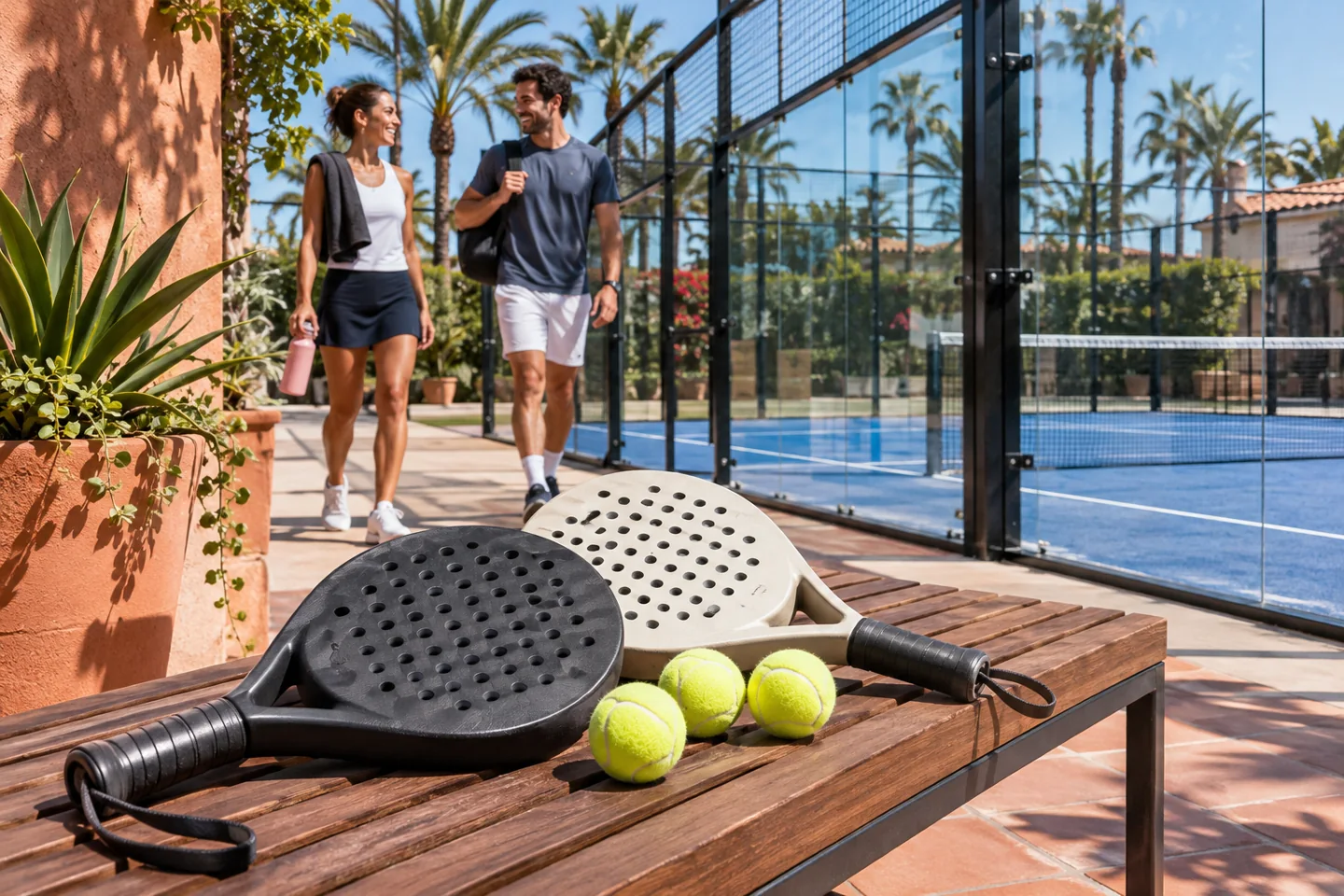
Separate the label from the playing feel
Manufacturers use shape, material and level labels to position their rackets. Those labels are not a substitute for trying the racket. Ask a retailer how the balance affects handling and whether the stated weight includes accessories. Two models with similar listed weights can feel different when you prepare quickly at the net. If possible, compare them during an actual demo rather than only holding them in a shop. Notice whether preparation becomes harder as the session continues.
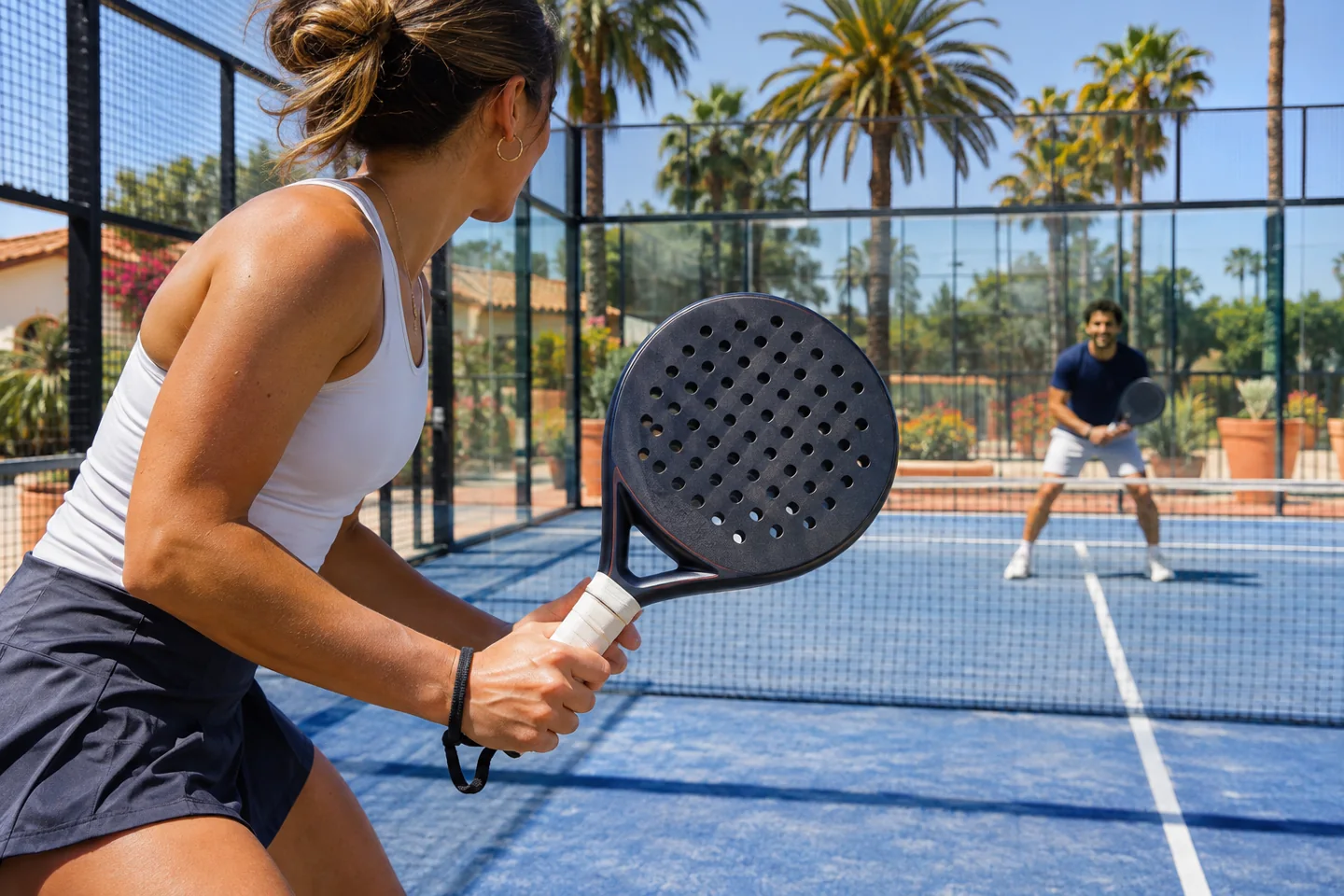
Put comfort and grip on the checklist
Check how naturally you can hold the racket and whether the grip feels secure without excessive squeezing. Ask about grip adjustment and follow the manufacturer’s safety instructions, including use of the wrist strap. Comfort is personal, so a recommendation from a stronger player may not match your needs. Stop using equipment that causes discomfort and seek appropriate advice if symptoms persist. A seller should answer basic questions clearly rather than promising that a particular model will prevent injury.
Compare the full purchase conditions
Look at demo availability, return conditions, warranty information and any restrictions on used equipment. Ask what accessories are included and whether the advertised price applies to the exact model and season being discussed. A discount is useful only if the racket is suitable. Avoid treating a professional endorsement as evidence that an advanced design will help a beginner. Keep a realistic budget for shoes and court fees as well, because equipment is only one part of getting started.
Use a repeatable test
During a demo, try controlled volleys, defensive contacts and a short period of ordinary play. Judge how easily you return to a ready position and whether the racket remains comfortable near the end. Do not base the whole decision on one excellent smash. Record a few impressions immediately afterwards so that comparisons are less dependent on memory. If technique questions dominate the test, read our transition lessons guide before upgrading. Explore Blog for related topics.